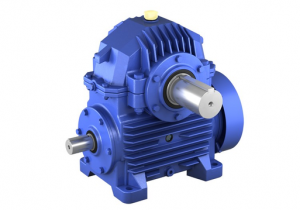
Compact Worm Reducers for Mining Screw Feeder Systems
Screw feeders are critical metering devices in mineral processing, controlling the volumetric flow of powders, granules, and crushed ore from storage bins to downstream equipment. Precise, stable speed control at very low RPM is essential for consistent process throughput. The reductor de gusanos excels in this role, providing smooth low-speed output in a compact package that fits beneath hopper discharge points and in tight process plant layouts.

Screw Feeder Operations: Precision Speed Control Through Worm Gearing
A screw feeder uses a helical auger rotating within a trough to move bulk material at a controlled rate. Output speeds are typically very low — 5 to 50 rpm — demanding high reduction ratios from the drive system. The worm gearbox delivers these ratios (up to 60:1 in a single stage) without the complexity and size of multi-stage helical reducers.
Installation space beneath hoppers and bins is invariably restricted. The compact right-angle configuration of worm gear units allows the drive motor to be oriented sideways, minimising the vertical footprint. This installation flexibility is a primary reason worm reducers dominate screw feeder applications in mineral processing plants.
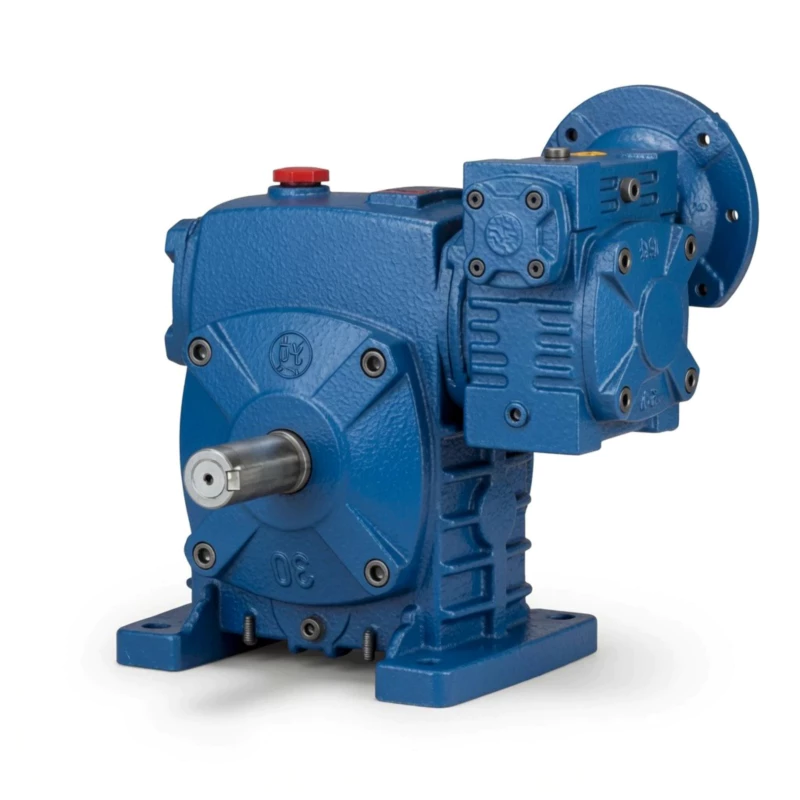
The worm shaft is carbon steel with surface hardening, mated to a cast phosphor bronze worm wheel with low friction coefficient for efficient power transfer. The grey cast iron housing incorporates external cooling fins to dissipate heat during continuous feeder operation, maintaining stable lubricant temperature and extending oil change intervals.
Technical Specifications and Selection Guide
| Parámetro | Especificación |
|---|---|
| Rango de relación de transmisión | 20:1 – 60:1 |
| Rango de par de salida | 50 – 1,500 Nm |
| Diámetro del eje de entrada | Ø 11 mm – Ø 35 mm |
| Diámetro del eje de salida | Ø 20 mm – Ø 70 mm |
| Material de vivienda | Grey Cast Iron with Cooling Fins |
| Opciones de montaje | Foot Mount / Flange Mount / Shaft Mount |
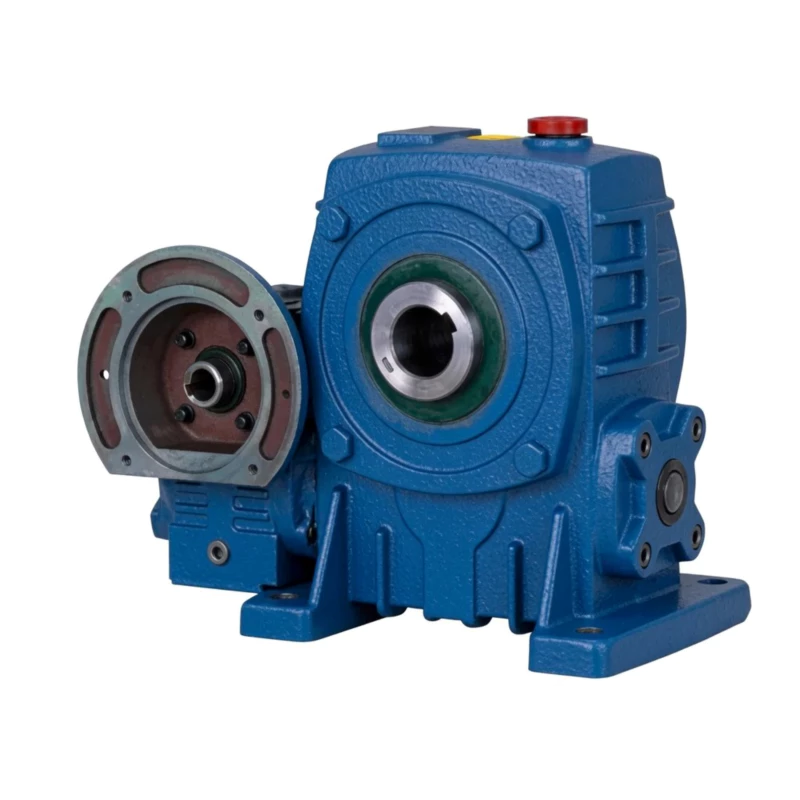
Screw feeder duty is relatively steady, but startup under a full hopper imposes significant breakaway torque. Apply a Factor de servicio (SF) of 1.25 to 1.5. For feeders handling abrasive materials, verify that the housing seal rating (IP55 minimum) prevents process dust from contaminating the lubrication. Ambient temperature in enclosed process buildings is generally moderate, but feeders positioned outdoors or near kilns require thermal derating. Shaft-mounted worm reducers eliminate alignment concerns and simplify installation under space-constrained hoppers.
Compliance, Certifications and Protection Ratings
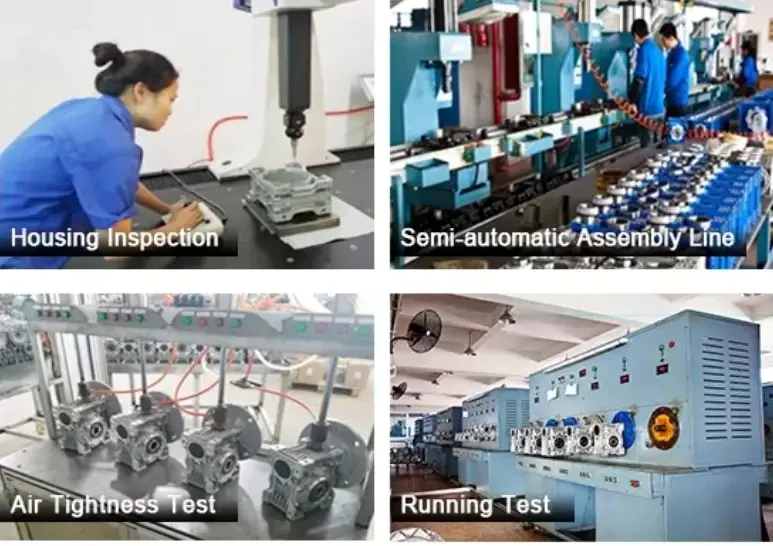
ISO 9001:2015 — Quality management system certified across all manufacturing and assembly processes.
Certificación CE — Full compliance with European Machinery Directive 2006/42/EC for global market access.
IEC Standard Interfaces — Motor input flanges and shaft dimensions conform to IEC 60072 for universal motor compatibility.
NEMA Standard Options — NEMA Cara C and foot-mount configurations available for North American motor integration.
IP65 / IP66 Protection — Ingress protection rated for complete dust exclusion and resistance to powerful water jets, ensuring reliable operation in harsh outdoor and industrial environments.
Proven Performance: Application Case Studies
⚖ Iron Ore Pellet Plant – Western Australia
Equipment: Screw Feeder (Bin Discharge)
Desafío: Variable feed rate caused inconsistent pellet quality; existing drive could not maintain stable low-speed operation below 10 rpm.
Solución: Installed 50:1 ratio worm reducer providing smooth output at 8 rpm with minimal speed hunting.
Resultado: Feed rate consistency improved to ±2%; pellet quality rejections reduced by 35%.
📈 Coal Handling Plant – Hunter Valley
Equipment: Twin-Screw Feeder System
Desafío: Bulky two-stage helical reducers could not physically fit beneath the low-clearance coal bin discharge chutes.
Solución: Compact worm gearboxes with shaft-mount configuration attached directly to the feeder screw shaft.
Resultado: Installation completed without modifying bin structure; drive footprint reduced by 65%.
⚙ Mineral Sands Processing – Western Australia
Equipment: Weigh Feeder Drive
Desafío: Speed fluctuations in DC motor drive caused ±8% mass flow variation, affecting downstream gravity separator performance.
Solución: Worm reducer paired with VFD-controlled AC motor delivered smooth, repeatable speed control at 12 rpm.
Resultado: Mass flow accuracy improved to ±1.5%; separator mineral recovery increased by 4%.
Our Competitive Advantages as Your Worm Reducer Supplier
🏭
Experiencia en el sector
Over 20 years of worm gearbox manufacturing expertise serving the mining sector and dozens of other industries worldwide.
💻
Soporte técnico remoto
Contamos con un equipo de ingeniería especializado disponible para la resolución de problemas a distancia, el suministro de modelos CAD y la consulta de aplicaciones mediante videollamada, correo electrónico o teléfono en todas las zonas horarias de Australia.
🔧
Diseño personalizado OEM/ODM
Capacidad total de diseño no estándar, incluyendo configuraciones de eje personalizadas, soportes de montaje especiales, relaciones de transmisión modificadas y materiales de carcasa a medida para satisfacer los requisitos exactos de la aplicación.
💰
Valor excepcional
Precios directos de fábrica, sin intermediarios. Flexibilidad en la cantidad mínima de pedido (MOQ) y programas de descuentos por volumen para compras basadas en proyectos.
🌎
Logística global
Rutas de envío establecidas a todos los principales puertos australianos, con opciones de depósito aduanero en Sídney y Melbourne para un envío nacional rápido.
Common Questions About Worm Gearboxes for This Application
What gear ratio is ideal for screw feeder worm reducers?
Ratios of 30:1 to 50:1 are most commonly used, producing typical feeder speeds of 10–30 rpm from a standard four-pole motor. Higher ratios can achieve feeder speeds below 10 rpm for fine powder metering applications.
Can a worm reducer handle the startup torque of a fully loaded screw feeder?
Yes. The bronze worm wheel absorbs startup torque spikes effectively. Size the gearbox with a service factor of 1.5 to accommodate the breakaway torque when the hopper applies full column pressure on the screw auger.
Is shaft-mounted installation possible with worm gearboxes for screw feeders?
Shaft-mounted worm reducers are widely available and are the preferred configuration for screw feeders. The gearbox mounts directly on the feeder drive shaft, eliminating the coupling, baseplate, and alignment procedures required for foot-mounted units.
How do worm gearboxes perform when handling abrasive mineral powders?
The gearbox itself is sealed from the process material. Select a unit with IP55 or higher protection to prevent fine abrasive dust from entering the oil chamber. External shaft seals should be rated for dusty environments.
What lubricant works best for screw feeder worm reducers in continuous duty?
Synthetic PAO or PAG gear oil rated ISO VG 220 provides optimal film strength for continuous duty. Change intervals of 8,000–10,000 hours are achievable with synthetic lubricants, significantly reducing maintenance in remote mining locations.
How compact are worm reducers compared to helical gearboxes at equivalent ratios?
A single-stage worm reducer at 50:1 is typically 40–60% smaller and lighter than a two-stage helical reducer delivering the same ratio, making it the preferred choice for space-constrained feeder installations.
Request Your Custom Worm Reducer Quote Today
Every screw feeders installation has unique requirements. Send us your specifications and our application engineers will recommend the best worm gear solution, complete with technical drawings and competitive pricing.
Explore nuestra Gama completa de productos o aprende más Acerca de nuestra empresa.