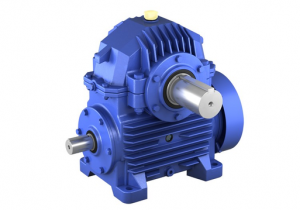
Worm Gear Drives for Precision Irrigation Valve Actuator Systems
Water is the most precious resource in Australian agriculture. With vast irrigation schemes spanning the Murray-Darling Basin and extensive drip-irrigation networks in horticultural regions, precise control of water flow through valve actuators is essential for sustainable farming. The worm gear drive is the preferred actuator mechanism for agricultural irrigation valves, offering self-locking position holding, smooth proportional control, and corrosion-resistant construction that endures years of outdoor exposure. Learn more about our company capabilities in delivering customised valve actuator solutions.

Irrigation Valve Control: How Worm Drives Enable Precision Water Management
Irrigation valve actuators convert rotary motor motion into the opening and closing action of butterfly valves, ball valves, or gate valves controlling water flow. The actuator must position the valve precisely — often at intermediate positions for proportional flow control — and hold that position indefinitely without consuming power. This is exactly what a worm gear drive delivers through its inherent self-locking capability.
When the motor stops, the worm gearbox locks the valve disc in its current position against pipeline pressure. No energy is consumed, no brake is needed, and the valve does not drift. For large-scale irrigation systems controlling hundreds of valves across remote paddocks, this zero-power position holding eliminates the need for complex electronic locking mechanisms and dramatically simplifies control system design.
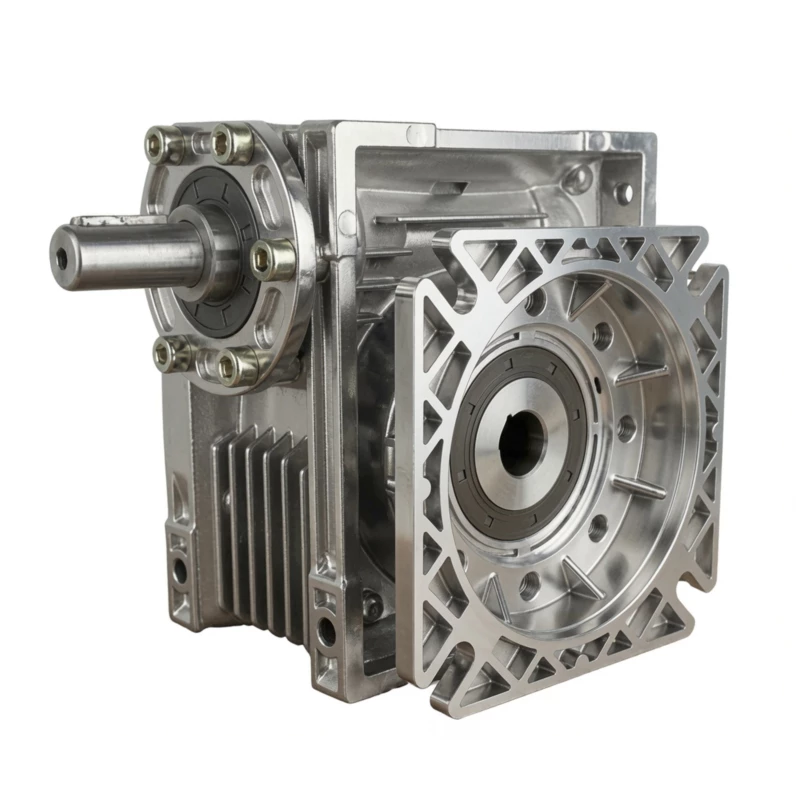
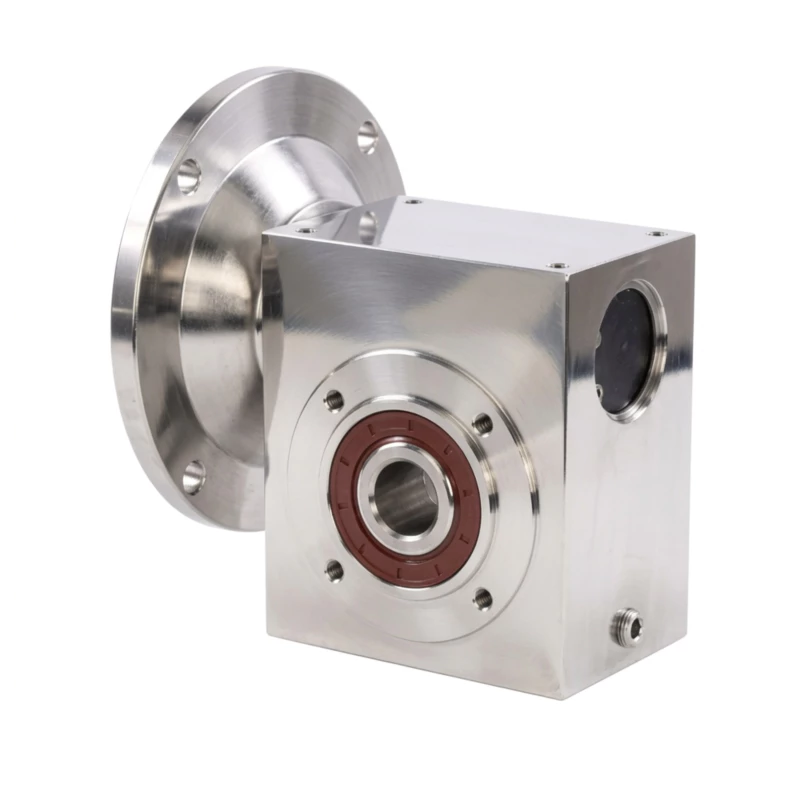
Materials are selected for water-contact environments. Worm shafts may be stainless steel 304 or coated alloy steel for corrosion resistance. Worm wheels use phosphor bronze for standard duty or nylon PA66 for lightweight, low-cost channels. Housings are die-cast aluminium ADC12, providing light weight and excellent corrosion resistance in outdoor installations.
Tekniska specifikationer och urvalsguide
| Parameter | Specifikation |
|---|---|
| Utväxlingsområde | 20:1 – 60:1 |
| Utgående vridmomentområde | 20 – 500 Nm |
| Ingående axeldiameter | Ø 9 mm – Ø 24 mm |
| Utgående axeldiameter | Ø 14 mm – Ø 40 mm (ISO 5211 compatible) |
| Höljets material | Die-Cast Aluminium ADC12 |
| Monteringsalternativ | ISO 5211 Flange / Direct Valve Mount |
Valve actuator selection depends on valve torque requirement, cycle frequency, and environmental exposure. Apply a Servicefaktor (SF) of 1.25 for standard irrigation duty and 1.5 for high-cycle pivot irrigation systems. Ensure the actuator output torque exceeds the valve breakaway torque (typically 1.5 to 2 times the running torque). For outdoor installations, specify IP65 minimum with UV-resistant housing paint or anodised aluminium finish. Lightweight aluminium housings are preferred for pipe-mounted actuators where structural support is limited.
Quality Assurance and Industry Standards
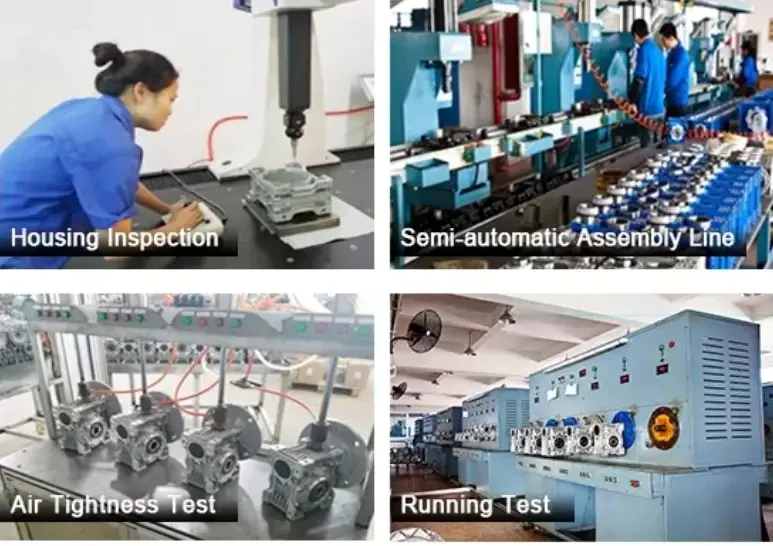
ISO 9001:2015 — Kvalitetsledningssystem certifierat för alla tillverknings- och monteringsprocesser.
CE-certifiering — Fullständig överensstämmelse med det europeiska maskindirektivet 2006/42/EG för global marknadstillträde.
IEC-standardgränssnitt — Motorns ingångsflänsar och axeldimensioner överensstämmer med IEC 60072 för universell motorkompatibilitet.
NEMA-standardalternativ — NEMA C-Face och fotmonterade konfigurationer tillgängliga för nordamerikansk motorintegration.
IP65/IP66-skydd — Intrångsskydd klassat för fullständig dammavstängning och motståndskraft mot kraftfulla vattenstrålar, vilket säkerställer tillförlitlig drift i krävande utomhus- och industriella miljöer.
Field-Tested Results: Industry Case Studies
💧 Cotton Irrigation – New South Wales
Equipment: Channel Gate Valve Actuators (200+ units)
Utmaning: Pneumatic actuators leaked air in desert heat, requiring constant compressor maintenance across 50 km of channels.
Lösning: Electric worm gear actuators eliminated pneumatic infrastructure entirely. Self-locking holds gate position without air pressure.
Resultat: Compressor fleet decommissioned; annual actuator maintenance cost reduced by 75%.
🍃 Viticulture – Barossa Valley
Equipment: Drip Zone Butterfly Valve Actuators
Utmaning: Solenoid actuators could not hold intermediate positions for proportional flow control, causing over-watering in sandy soils.
Lösning: Worm gear actuators provide infinite position holding between fully open and fully closed, enabling precise zone-by-zone flow adjustment.
Resultat: Water usage reduced by 22%; vine stress indicators improved in marginal soil zones.
🌾 Rice Growing – Riverina Region
Equipment: Bay Inlet Valve Actuators
Utmaning: Manual valve operation across 200 bays required 3 full-time staff during flooding season.
Lösning: Retrofitted worm gear electric actuators with remote control via 4G telemetry. Self-locking ensures position holding during communication dropouts.
Resultat: Labour reduced to 1 operator managing all 200 bays from a central control room.
What Sets Us Apart in Worm Gear Manufacturing?
🏭
Branscherfarenhet
Over 20 years of worm gearbox manufacturing expertise serving the agriculture sector and dozens of other industries worldwide.
💻
Teknisk fjärrsupport
Dedikerat ingenjörsteam tillgängligt för felsökning på distans, tillhandahållande av CAD-modeller och applikationskonsultation via videosamtal, e-post eller telefon i alla australiska tidszoner.
🔧
OEM/ODM-anpassad design
Fullständig kapacitet för icke-standardiserade designlösningar, inklusive anpassade axelkonfigurationer, speciella monteringsfästen, modifierade utväxlingsförhållanden och specialanpassade husmaterial för att möta exakta applikationskrav.
💰
Enastående värde
Direktprissättning från fabrik utan mellanhänder. Konkurrenskraftig flexibilitet vad gäller MOQ och volymrabattprogram för projektbaserad upphandling.
🌎
Global logistik
Etablerade sjöfartsrutter till alla större australiska hamnar med tulllageralternativ i Sydney och Melbourne för snabb inrikes leverans.
Expert Answers to Your Worm Reducer Questions
Why are worm gear actuators preferred for irrigation valves?
The inherent self-locking function holds the valve in any position without power or braking. This is critical in irrigation where valves must maintain flow settings during power outages or communication failures across remote irrigation networks.
Can worm gear actuators provide proportional flow control?
Yes. Unlike on/off solenoid actuators, worm gear actuators can position the valve at any intermediate point between fully open and fully closed, enabling precise proportional control of water flow rates.
What IP rating is needed for outdoor irrigation valve actuators?
IP65 is the standard for field-mounted irrigation actuators, protecting against dust ingress and rain. In locations subject to flooding or submersion, IP67 or IP68 rated units should be specified.
How long do worm gear irrigation actuators last in Australian conditions?
With appropriate materials (stainless steel or aluminium housings, UV-resistant coatings), service life of 10–15 years is typical. The low cycle frequency of most irrigation valves (a few cycles per day) keeps mechanical wear minimal.
Are worm gear actuators compatible with automated irrigation control systems?
Yes. Modern worm gear actuators accept 4–20 mA, 0–10 V, or digital Modbus/BACnet signals for remote positioning. They integrate seamlessly with SCADA and telemetry-based irrigation management systems.
What is the power consumption of a worm gear valve actuator?
Power is consumed only during valve movement. Once positioned, the self-locking worm holds the valve with zero power draw. Typical movement power ranges from 30 W for small valves to 250 W for large channel gates.
Speak With Our Worm Gearbox Engineers
Have questions about worm reducer selection for irrigation valve actuators? Our technical support team provides free consultation, 3D CAD models, and rapid quotation for standard and custom configurations.
Bläddra bland våra komplett produktsortiment eller läs mer om vårt företag.