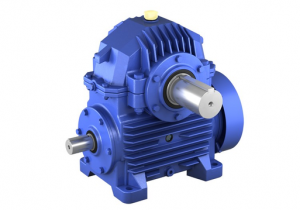
High-Torque Worm Reducers Engineered for Mining Crusher Applications
Crushing is the first and most energy-intensive stage of mineral processing. From jaw crushers breaking run-of-mine ore to cone crushers producing fine aggregate, these machines demand extreme torque, shock resistance, and compact installation. The worm reducer delivers reduction ratios up to 100:1 in a single stage, generating massive output torque within a remarkably small footprint — a decisive advantage in underground mining where space is severely constrained. Explore our full range of reductores de engranajes helicoidales engineered for crusher duty.
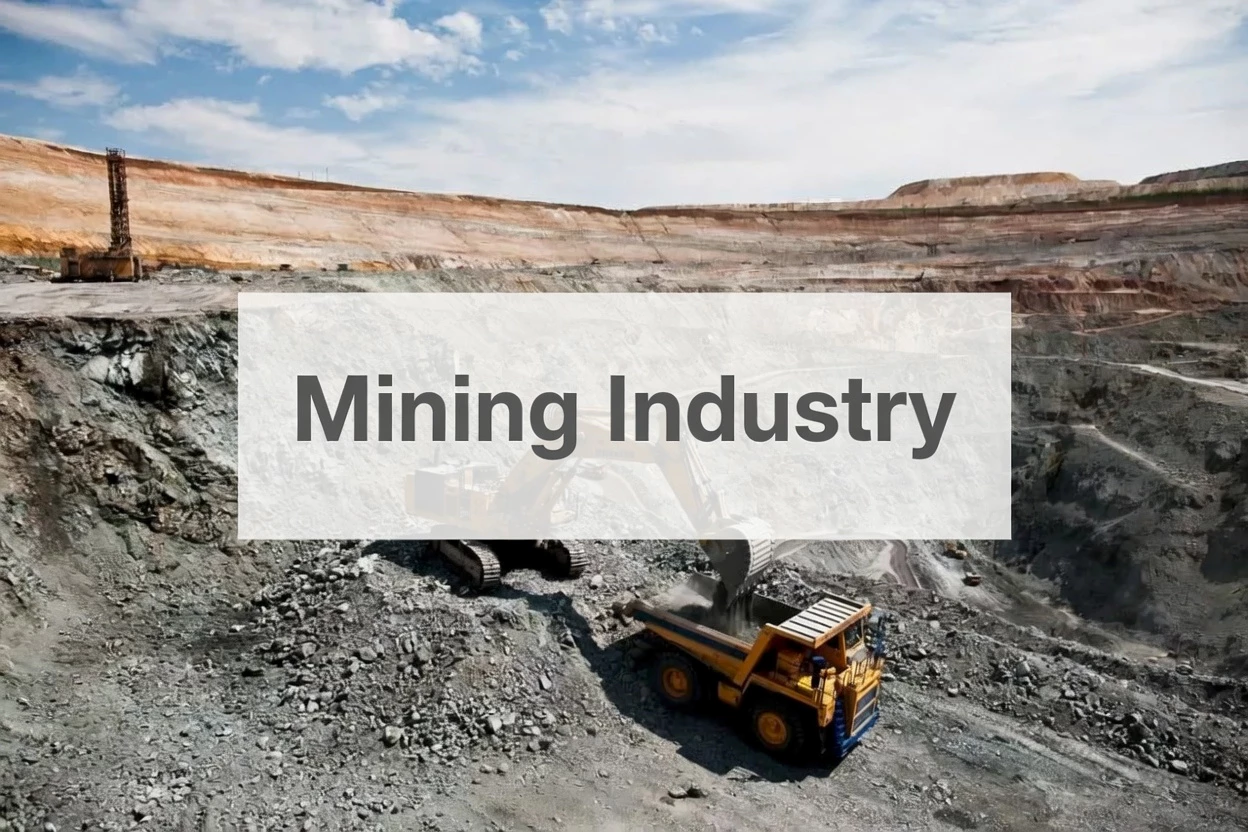
Crushing Operations: The Role of Worm Gear Drives
Mining crushers subject their drive trains to some of the harshest loading conditions in any industrial application. Feed material varies from soft limestone to hard granite, creating unpredictable shock loads that spike instantaneously. The worm reducer absorbs these transient forces through the conforming contact between the hardened steel worm and the bronze worm wheel — a material pairing where the softer bronze deforms elastically under impact rather than fracturing.
The extreme reduction ratio capability of worm gearing — up to 100:1 in a single stage — means a compact worm gearbox can replace a two-stage helical reducer, significantly reducing the physical envelope of the drive assembly. In underground stope crushers where headroom may be less than 2 metres, this compactness is not a convenience but a necessity.
Worm shafts are precision-ground from carburized alloy steel, and the worm wheels are cast from enhanced-wear alloy bronze. Housing construction uses ductile iron with integrated IP65-rated dust sealing to exclude the fine abrasive particles that pervade crusher environments.
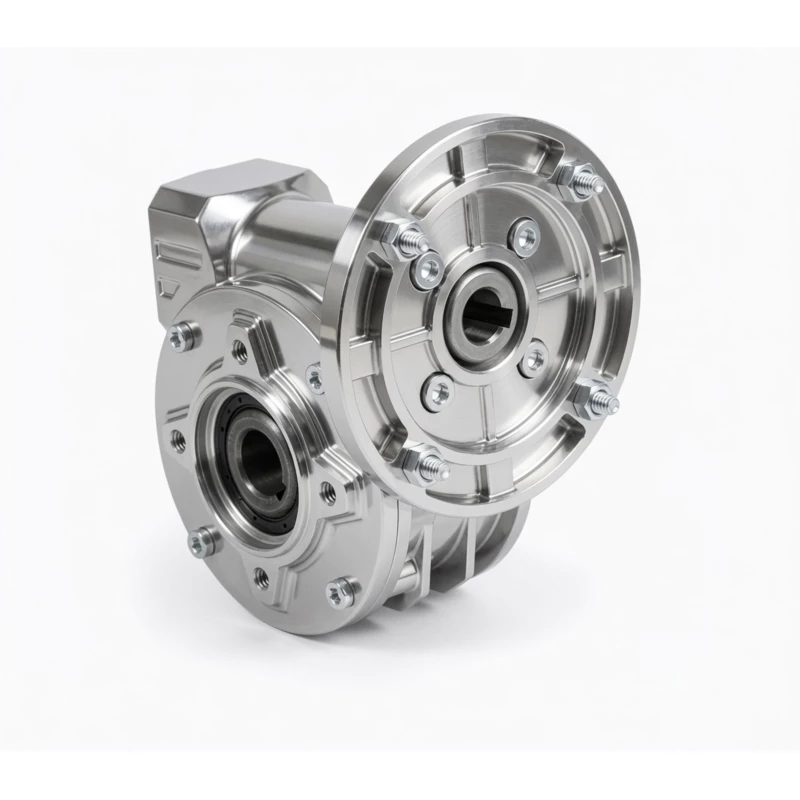
Technical Specifications and Selection Guide
| Parámetro | Especificación |
|---|---|
| Rango de relación de transmisión | 10:1 – 100:1 |
| Rango de par de salida | 500 – 8,000 Nm |
| Diámetro del eje de entrada | Ø 19 mm – Ø 55 mm |
| Diámetro del eje de salida | Ø 35 mm – Ø 120 mm |
| Material de vivienda | Ductile Iron (GGG50) |
| Opciones de montaje | Foot Mount / Torque Arm |
Crusher applications impose severe shock loads, so apply a minimum Factor de servicio (SF) of 2.0 to 2.5. Verify that the peak torque during tramp iron events does not exceed the gearbox momentary overload rating (typically 200% of nominal for 5 seconds). Underground installations should consider IP65 sealed housings and food-grade synthetic lubricants that maintain viscosity at elevated ambient temperatures. Space-constrained installations benefit from shaft-mounted configurations that eliminate the need for a separate baseplate.
Quality Assurance and Industry Standards
ISO 9001:2015 — Quality management system certified across all manufacturing and assembly processes.
Certificación CE — Full compliance with European Machinery Directive 2006/42/EC for global market access.
IEC Standard Interfaces — Motor input flanges and shaft dimensions conform to IEC 60072 for universal motor compatibility.
NEMA Standard Options — NEMA Cara C and foot-mount configurations available for North American motor integration.
IP65 / IP66 Protection — Ingress protection rated for complete dust exclusion and resistance to powerful water jets, ensuring reliable operation in harsh outdoor and industrial environments.
Field-Tested Results: Industry Case Studies
⚡ Underground Gold Mine – Western Australia
Equipment: Jaw Crusher (Primary Stage)
Desafío: Two-stage helical gearbox exceeded available headroom, requiring costly excavation of crusher chamber floor.
Solución: Replaced with single-stage worm reducer (ratio 80:1) delivering equivalent output torque in 60% less vertical space.
Resultado: Eliminated AUD 120,000 in chamber modification costs; installation completed in 2 days versus 2 weeks.
⚓ Aggregate Quarry – Victoria
Equipment: Cone Crusher (Secondary Stage)
Desafío: Tramp iron events destroyed helical gear teeth twice annually, each repair costing AUD 35,000 in parts and downtime.
Solución: Worm gearbox with bronze wheel acts as a mechanical fuse — wheel deforms under extreme overload, protecting motor and crusher.
Resultado: Annual gear replacement cost reduced by 80%; worm wheel replacement takes 3 hours versus 3 days for helical gears.
🔧 Nickel Mine – Western Australia
Equipment: Tertiary Impact Crusher
Desafío: Fine dust infiltrated gearbox seals, contaminating oil and causing premature bearing failure every 2,000 hours.
Solución: Installed IP65-rated worm reducer with pressurized oil bath and labyrinth shaft seals.
Resultado: Bearing service life extended to 12,000 hours; oil analysis shows zero particulate ingress.

What Sets Us Apart in Worm Gear Manufacturing?
🏆
Experiencia en el sector
Over 20 years of worm gearbox manufacturing expertise serving the mining sector and dozens of other industries worldwide.
💬
Soporte técnico remoto
Contamos con un equipo de ingeniería especializado disponible para la resolución de problemas a distancia, el suministro de modelos CAD y la consulta de aplicaciones mediante videollamada, correo electrónico o teléfono en todas las zonas horarias de Australia.
⚙
Diseño personalizado OEM/ODM
Capacidad total de diseño no estándar, incluyendo configuraciones de eje personalizadas, soportes de montaje especiales, relaciones de transmisión modificadas y materiales de carcasa a medida para satisfacer los requisitos exactos de la aplicación.
📈
Valor excepcional
Precios directos de fábrica, sin intermediarios. Flexibilidad en la cantidad mínima de pedido (MOQ) y programas de descuentos por volumen para compras basadas en proyectos.
📦
Logística global
Rutas de envío establecidas a todos los principales puertos australianos, con opciones de depósito aduanero en Sídney y Melbourne para un envío nacional rápido.
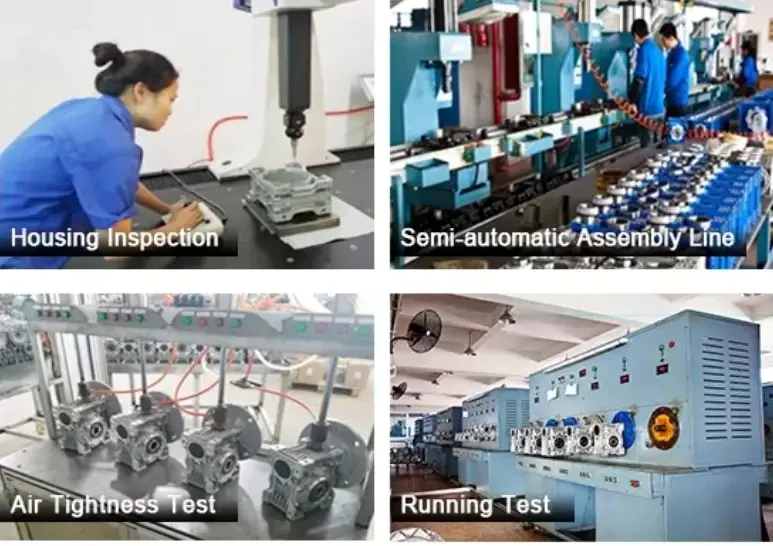
Expert Answers to Your Worm Reducer Questions
What makes worm reducers suitable for mining crusher applications?
Worm reducers deliver extremely high torque within compact dimensions. Their single-stage ratios up to 100:1 replace bulky multi-stage helical units, and the bronze worm wheel acts as a sacrificial element protecting more expensive drivetrain components during shock overloads.
How do worm gearboxes handle the shock loads typical in crushing operations?
The worm wheel, cast from phosphor bronze or alloy bronze, deforms elastically under transient impact loads rather than fracturing like hardened steel gears. This inherent shock absorption protects both the motor and the crusher mechanism from damage.
What service factor should be applied when sizing a worm reducer for a crusher?
A minimum service factor of 2.0 is recommended, increasing to 2.5 for applications with frequent tramp iron events or highly variable feed material. Always verify the momentary overload capacity against expected peak loads.
Can a worm gear unit operate reliably in underground mining environments?
Yes, with appropriate IP65 or higher dust sealing, pressurized lubrication, and corrosion-resistant surface treatments. Worm gearboxes have fewer moving parts than planetary or helical units, reducing the probability of failure in hard-to-access underground locations.
What is the expected service life of a worm gearbox on a mining crusher?
With proper sizing, lubrication, and maintenance, worm gearbox service life typically exceeds 20,000 operating hours in crusher duty. The worm wheel is designed as a replaceable wear item, with field replacement achievable in a few hours.
Speak With Our Worm Gearbox Engineers
Have questions about worm reducer selection for mining crushers? Our technical support team provides free consultation, 3D CAD models, and rapid quotation for standard and custom configurations.
Explore nuestra Gama completa de productos o aprende más Acerca de nuestra empresa.