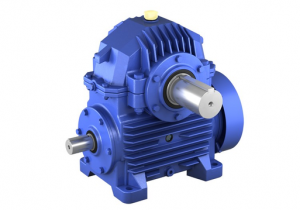
Worm Gear Reducers Engineered for Livestock Feed Mixer Applications
Australia’s livestock industry — spanning cattle, sheep, and dairy across vast pastoral regions — relies on feed mixers to blend nutritional rations uniformly and efficiently. These machines operate in remote locations where mechanical simplicity and easy maintenance are not just conveniences but operational necessities. A reductor de gusanos provides the reliable, low-speed, high-torque drive that feed mixing demands, with a robust two-component gear set that station and farm staff can maintain without specialist tooling or technical training.

Feed Mixing Equipment: Worm Drive Advantages in Pastoral Operations
Feed mixers use single or twin auger screws to blend hay, silage, grain, mineral supplements, and molasses into a homogeneous ration. The mixing augers rotate at 15–40 rpm, requiring substantial torque to turn through dense, heavy material. The motor, typically 15–55 kW, drives the auger through a speed reducer that must reliably convert 1,450 rpm to the required mixing speed.
For pastoral operations across the Australian outback, equipment reliability takes on heightened importance. A feed mixer breakdown during drought-feeding can jeopardise livestock health across an entire station. Worm reducers contain only two primary gear components — the worm and the wheel — making them inherently more reliable than multi-stage gearboxes. When maintenance is eventually needed, the worm wheel can be replaced on-site with basic hand tools.
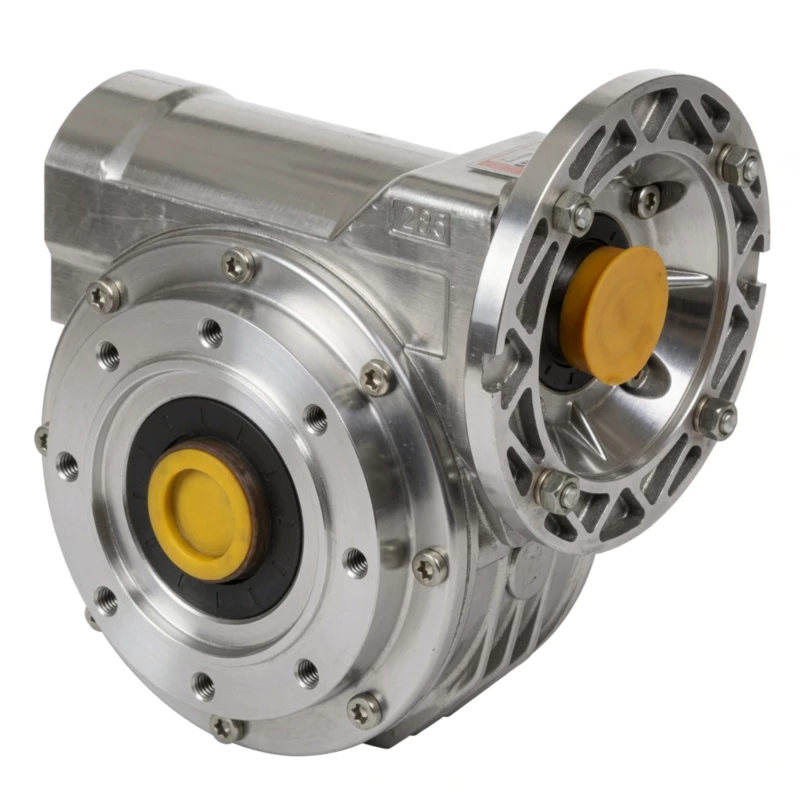
The worm shaft is heat-treated carbon steel with surface grinding for precise tooth geometry. The cast phosphor bronze worm wheel delivers low-friction operation and long service life. Cast iron housings with cooling fin design maintain oil temperature during extended mixing cycles, with IP54 sealing protecting the gearbox internals from hay dust and moisture.
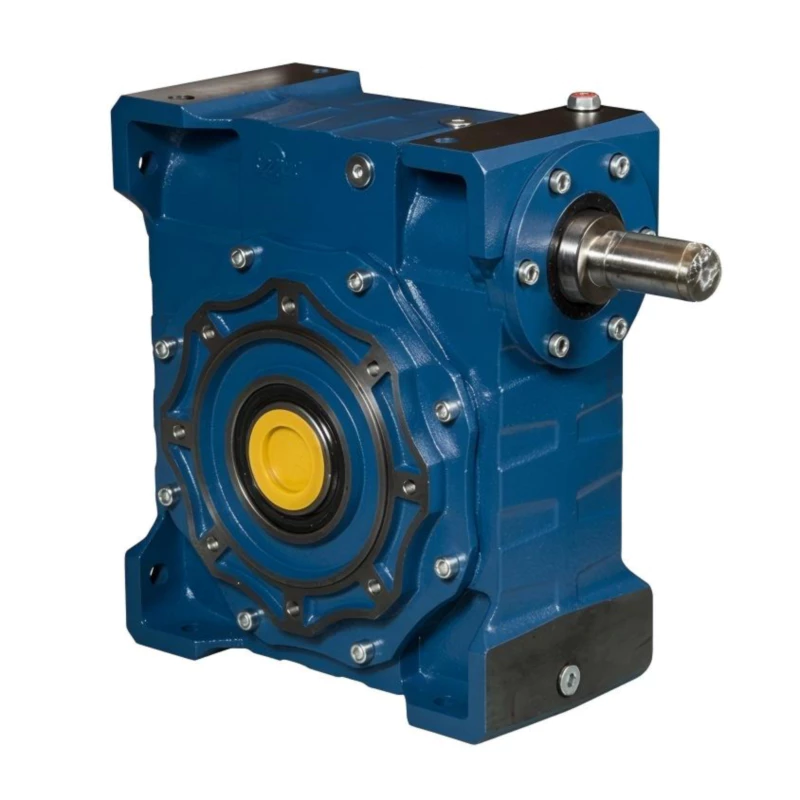
Selección de modelos y datos de ingeniería
| Parámetro | Especificación |
|---|---|
| Rango de relación de transmisión | 15:1 – 40:1 |
| Rango de par de salida | 200 – 3,500 Nm |
| Diámetro del eje de entrada | Ø 19 mm – Ø 50 mm |
| Diámetro del eje de salida | Ø 30 mm – Ø 90 mm |
| Material de vivienda | Cast Iron with Cooling Fins |
| Opciones de montaje | Foot Mount / Direct Shaft Mount |
Feed mixer applications involve moderate shock loads from tangled baling twine and dense silage pockets. Apply a Factor de servicio (SF) of 1.5 for standard rations and 1.75 for mixers processing whole bales or round-bale silage. The gearbox should be sized to handle breakaway torque when the auger starts under a full hopper. In hot inland climates, synthetic gear oil (ISO VG 220) maintains film strength and extends drain intervals to 10,000 hours — eliminating mid-season oil changes in remote pastoral operations.
Compliance, Certifications and Protection Ratings
| Norma/Certificación | Detalles |
|---|---|
| ISO 9001:2015 | Sistema de gestión de calidad certificado para el diseño, la fabricación y la entrega. |
| Certificación CE | Cumple con la Directiva de Maquinaria de la UE 2006/42/CE. |
| IEC 60072 | Dimensiones de la interfaz del motor por norma IEC para compatibilidad universal con motores |
| NEMA Cara C | Norma NEMA Opciones de montaje del motor disponibles bajo petición. |
| IP65 / IP66 | Protección total contra el polvo y resistencia a los chorros de agua para exteriores y entornos adversos. |
Proven Performance: Application Case Studies
Our Competitive Advantages as Your Worm Reducer Supplier
Experiencia en el sector
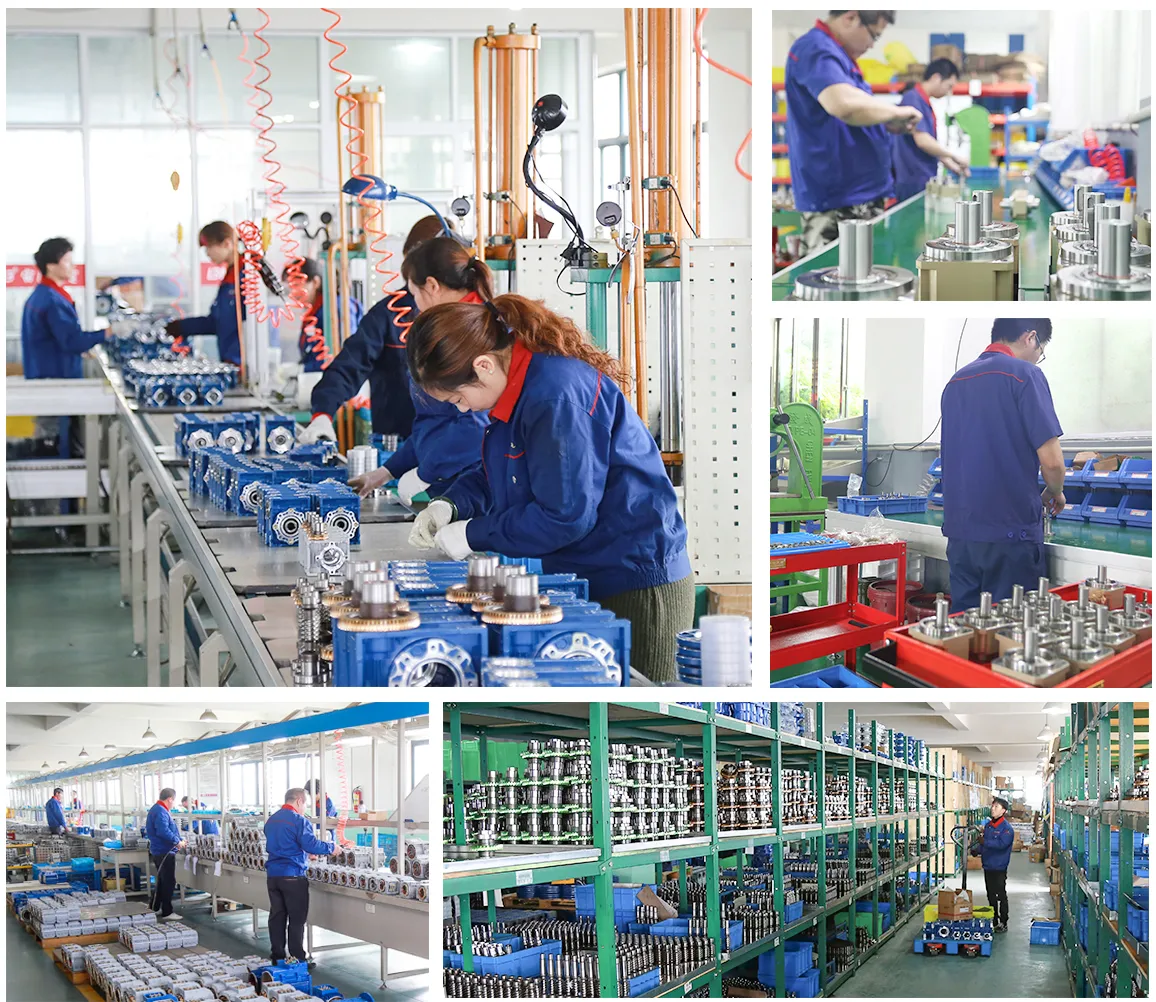
Over 20 years of worm gearbox manufacturing expertise serving the agriculture sector and dozens of other industries worldwide.
Soporte técnico remoto
Contamos con un equipo de ingeniería especializado disponible para la resolución de problemas a distancia, el suministro de modelos CAD y la consulta de aplicaciones mediante videollamada, correo electrónico o teléfono en todas las zonas horarias de Australia.
Diseño personalizado OEM/ODM
Capacidad total de diseño no estándar, incluyendo configuraciones de eje personalizadas, soportes de montaje especiales, relaciones de transmisión modificadas y materiales de carcasa a medida para satisfacer los requisitos exactos de la aplicación.
Valor excepcional
Precios directos de fábrica, sin intermediarios. Flexibilidad en la cantidad mínima de pedido (MOQ) y programas de descuentos por volumen para compras basadas en proyectos.
Logística global
Rutas de envío establecidas a todos los principales puertos australianos, con opciones de depósito aduanero en Sídney y Melbourne para un envío nacional rápido.
Common Questions About Worm Gearboxes for This Application
Q: What makes worm gearboxes a good choice for feed mixer applications?
A: Their mechanical simplicity — only two main components — delivers high reliability in remote locations. The low-speed, high-torque output matches feed auger requirements perfectly, and field serviceability means station staff can handle maintenance without specialist help.
Q: How noisy are worm gear reducers compared to other gearbox types?
A: Worm gears are among the quietest gear types available. The sliding contact between worm and wheel produces less noise than the rolling contact of spur or helical gears, typically operating 8–15 dB(A) quieter at equivalent power levels.
Q: Can a worm reducer handle the strain of mixing whole bales?
A: Yes, with appropriate sizing. Whole-bale mixing creates high breakaway and peak torques as the auger breaks apart compressed bales. Size with a service factor of 1.75–2.0 and verify the momentary overload rating covers the expected peak torque.
Q: What maintenance schedule suits a feed mixer worm gearbox in outback conditions?
A: Check oil level weekly via the sight glass. Change synthetic oil every 10,000 hours or annually. Inspect shaft seals for dust contamination at each oil change. These tasks require no special tools or training.
Q: How long do worm gearbox components last in feed mixer service?
A: The worm shaft typically lasts the lifetime of the mixer (15–20 years). The bronze worm wheel is designed as a wear item with a service life of 8,000–15,000 hours depending on load severity. Replacement takes 2–4 hours.
Request Your Custom Worm Reducer Quote Today
Every feed mixers installation has unique requirements. Send us your specifications and our application engineers will recommend the best worm gear solution, complete with technical drawings and competitive pricing.
Explore nuestra Gama completa de productos o aprende más Acerca de nuestra empresa.