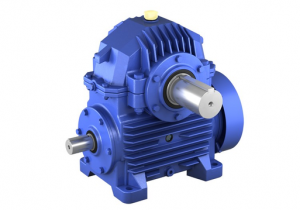
Worm Gear Reducers Engineered for Livestock Feed Mixer Applications
Australia’s livestock industry — spanning cattle, sheep, and dairy across vast pastoral regions — relies on feed mixers to blend nutritional rations uniformly and efficiently. These machines operate in remote locations where mechanical simplicity and easy maintenance are not just conveniences but operational necessities. A Wurmreduzierer provides the reliable, low-speed, high-torque drive that feed mixing demands, with a robust two-component gear set that station and farm staff can maintain without specialist tooling or technical training.

Feed Mixing Equipment: Worm Drive Advantages in Pastoral Operations
Feed mixers use single or twin auger screws to blend hay, silage, grain, mineral supplements, and molasses into a homogeneous ration. The mixing augers rotate at 15–40 rpm, requiring substantial torque to turn through dense, heavy material. The motor, typically 15–55 kW, drives the auger through a speed reducer that must reliably convert 1,450 rpm to the required mixing speed.
For pastoral operations across the Australian outback, equipment reliability takes on heightened importance. A feed mixer breakdown during drought-feeding can jeopardise livestock health across an entire station. Worm reducers contain only two primary gear components — the worm and the wheel — making them inherently more reliable than multi-stage gearboxes. When maintenance is eventually needed, the worm wheel can be replaced on-site with basic hand tools.
The worm shaft is heat-treated carbon steel with surface grinding for precise tooth geometry. The cast phosphor bronze worm wheel delivers low-friction operation and long service life. Cast iron housings with cooling fin design maintain oil temperature during extended mixing cycles, with IP54 sealing protecting the gearbox internals from hay dust and moisture.
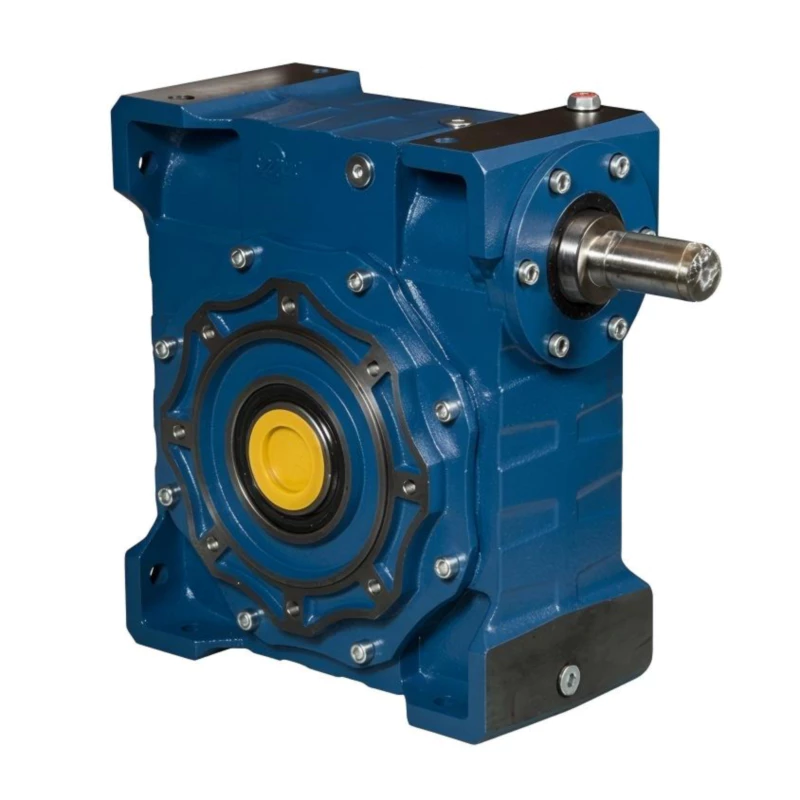
Auswahl von Konstruktionsdaten und Modellen
| Parameter | Spezifikation |
|---|---|
| Übersetzungsbereich | 15:1 – 40:1 |
| Drehmomentbereich | 200 – 3,500 Nm |
| Eingangswellendurchmesser | Ø 19 mm – Ø 50 mm |
| Abtriebswellendurchmesser | Ø 30 mm – Ø 90 mm |
| Gehäusematerial | Cast Iron with Cooling Fins |
| Montageoptionen | Foot Mount / Direct Shaft Mount |
Feed mixer applications involve moderate shock loads from tangled baling twine and dense silage pockets. Apply a Servicefaktor (SF) of 1.5 for standard rations and 1.75 for mixers processing whole bales or round-bale silage. The gearbox should be sized to handle breakaway torque when the auger starts under a full hopper. In hot inland climates, synthetic gear oil (ISO VG 220) maintains film strength and extends drain intervals to 10,000 hours — eliminating mid-season oil changes in remote pastoral operations.
Compliance, Certifications and Protection Ratings
| Norm / Zertifizierung | Details |
|---|---|
| ISO 9001:2015 | Zertifiziertes Qualitätsmanagementsystem für Design, Fertigung und Lieferung |
| CE-Zertifizierung | Entspricht der EU-Maschinenrichtlinie 2006/42/EG |
| IEC 60072 | Motorschnittstellenabmessungen pro IEC-Norm für universelle Motorkompatibilität |
| NEMA C-Fassade | NEMA-Standard Motorhalterungsoptionen auf Anfrage erhältlich |
| IP65 / IP66 | Vollständiger Staubschutz und Beständigkeit gegen Wasserstrahl für den Einsatz im Freien und unter rauen Bedingungen |
Proven Performance: Application Case Studies
Our Competitive Advantages as Your Worm Reducer Supplier
Branchenerfahrung
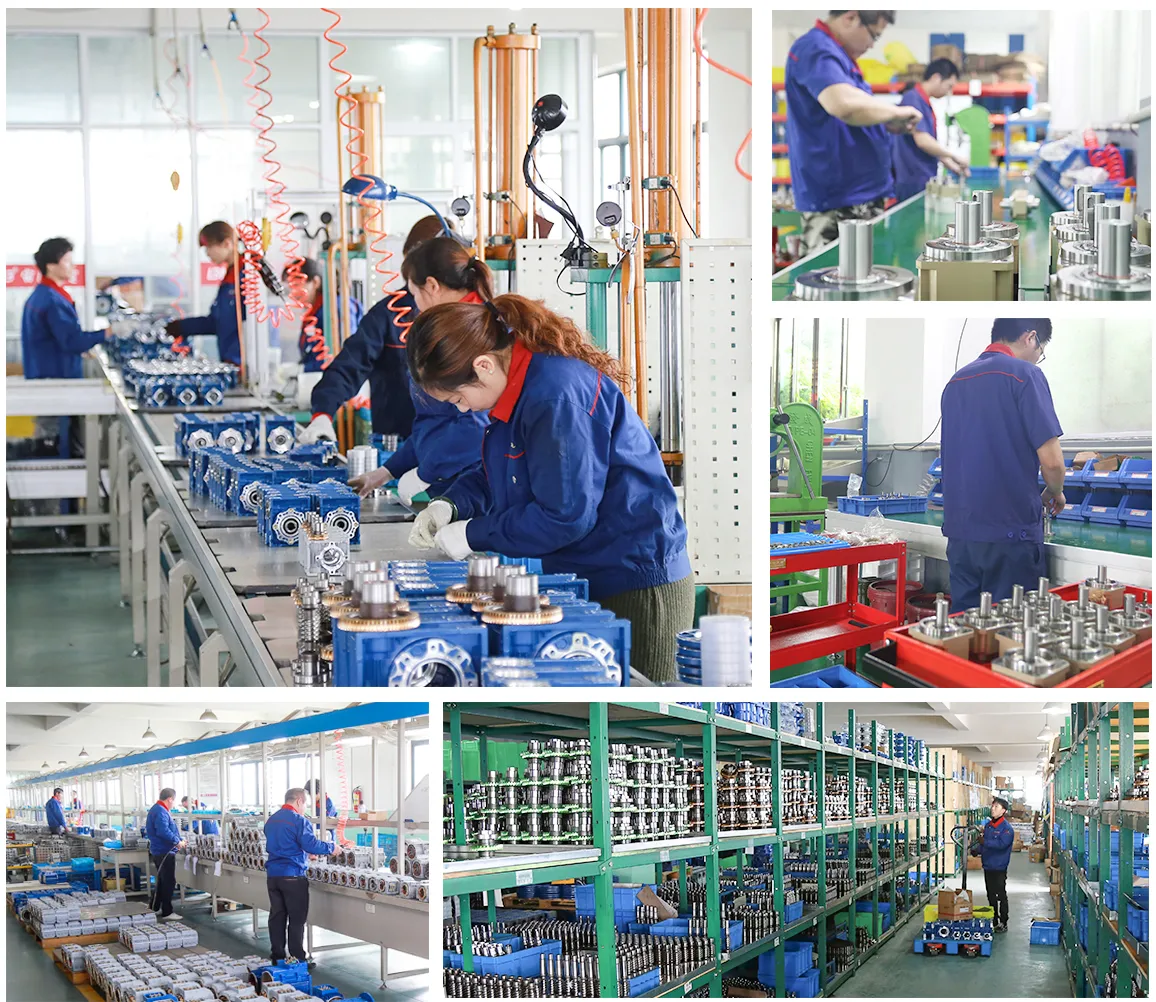
Mehr als 20 Jahre Erfahrung in der Herstellung von Schneckengetrieben für den Agrarsektor und Dutzende anderer Branchen weltweit.
Technischer Support per Fernzugriff
Ein engagiertes Ingenieurteam steht Ihnen für die Fehlerbehebung aus der Ferne, die Bereitstellung von CAD-Modellen und die Anwendungsberatung per Videoanruf, E-Mail oder Telefon in allen australischen Zeitzonen zur Verfügung.
OEM/ODM-Kundenspezifisches Design
Vollständige Anpassungsfähigkeit an Sonderanfertigungen, einschließlich kundenspezifischer Wellenkonfigurationen, spezieller Montagehalterungen, modifizierter Übersetzungsverhältnisse und maßgeschneiderter Gehäusematerialien, um die genauen Anwendungsanforderungen zu erfüllen.
Hervorragendes Preis-Leistungs-Verhältnis
Preise direkt ab Werk ohne Zwischenhändleraufschläge. Wettbewerbsfähige Mindestbestellmengen, flexible Mengenrabatte und attraktive Mengenrabatte für projektbezogene Beschaffung.
Globale Logistik
Etablierte Schifffahrtsrouten zu allen wichtigen australischen Häfen mit Zolllageroptionen in Sydney und Melbourne für einen schnellen Inlandsversand.
Common Questions About Worm Gearboxes for This Application
Q: What makes worm gearboxes a good choice for feed mixer applications?
A: Their mechanical simplicity — only two main components — delivers high reliability in remote locations. The low-speed, high-torque output matches feed auger requirements perfectly, and field serviceability means station staff can handle maintenance without specialist help.
Q: How noisy are worm gear reducers compared to other gearbox types?
A: Worm gears are among the quietest gear types available. The sliding contact between worm and wheel produces less noise than the rolling contact of spur or helical gears, typically operating 8–15 dB(A) quieter at equivalent power levels.
Q: Can a worm reducer handle the strain of mixing whole bales?
A: Yes, with appropriate sizing. Whole-bale mixing creates high breakaway and peak torques as the auger breaks apart compressed bales. Size with a service factor of 1.75–2.0 and verify the momentary overload rating covers the expected peak torque.
Q: What maintenance schedule suits a feed mixer worm gearbox in outback conditions?
A: Check oil level weekly via the sight glass. Change synthetic oil every 10,000 hours or annually. Inspect shaft seals for dust contamination at each oil change. These tasks require no special tools or training.
Q: How long do worm gearbox components last in feed mixer service?
A: The worm shaft typically lasts the lifetime of the mixer (15–20 years). The bronze worm wheel is designed as a wear item with a service life of 8,000–15,000 hours depending on load severity. Replacement takes 2–4 hours.
Request Your Custom Worm Reducer Quote Today
Every feed mixers installation has unique requirements. Send us your specifications and our application engineers will recommend the best worm gear solution, complete with technical drawings and competitive pricing.
Stöbern Sie in unserem Angebot komplettes Produktsortiment oder mehr erfahren über unser Unternehmen.