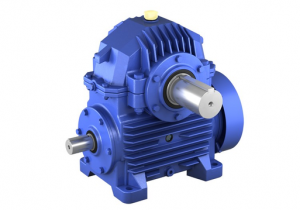
Worm Gear Reducers in Wind Turbine Blade Pitch Control Applications
Wind energy is the fastest-growing segment of Australia’s renewable electricity generation, contributing 39.4% of the nation’s clean energy output. The blade pitch control system is one of the most critical mechanisms in a wind turbine, adjusting blade angle to optimise energy capture and protect the turbine during high-wind events. Worm gear reducers serve as auxiliary pitch drive components, providing precise angular control and fail-safe self-locking in the extreme operating conditions encountered atop 100-metre towers. Learn more about our engineering team and wind energy experience.

Blade Pitch Actuation: Worm Drive Precision for Wind Energy Safety
Each blade of a modern wind turbine is mounted on a pitch bearing that allows it to rotate along its longitudinal axis. By adjusting the blade pitch angle, the control system regulates rotor speed and power output across the entire wind speed range. During storms, the pitch system feathers the blades to a safe position that minimises aerodynamic loading and prevents turbine damage.
Worm gear reducers function as auxiliary pitch drives or backup feathering systems within the blade pitch mechanism. The self-locking characteristic is critical for safety: if the primary pitch drive fails, the worm gear holds the blade at its last commanded position, preventing uncontrolled blade rotation that could destroy the turbine. In emergency feathering, the worm drive is used to slowly rotate the blade to a safe angle against the aerodynamic restoring moment.
Operating at the top of a wind tower means exposure to extreme temperature variations, lightning, vibration, and limited access for maintenance. Worm shafts are carburized and quenched alloy steel rated for temperatures from -30°C to +70°C. Special alloy bronze worm wheels maintain toughness at sub-zero temperatures. Housings are fully sealed aluminium or stainless steel with IP66 protection against driving rain and ice formation.
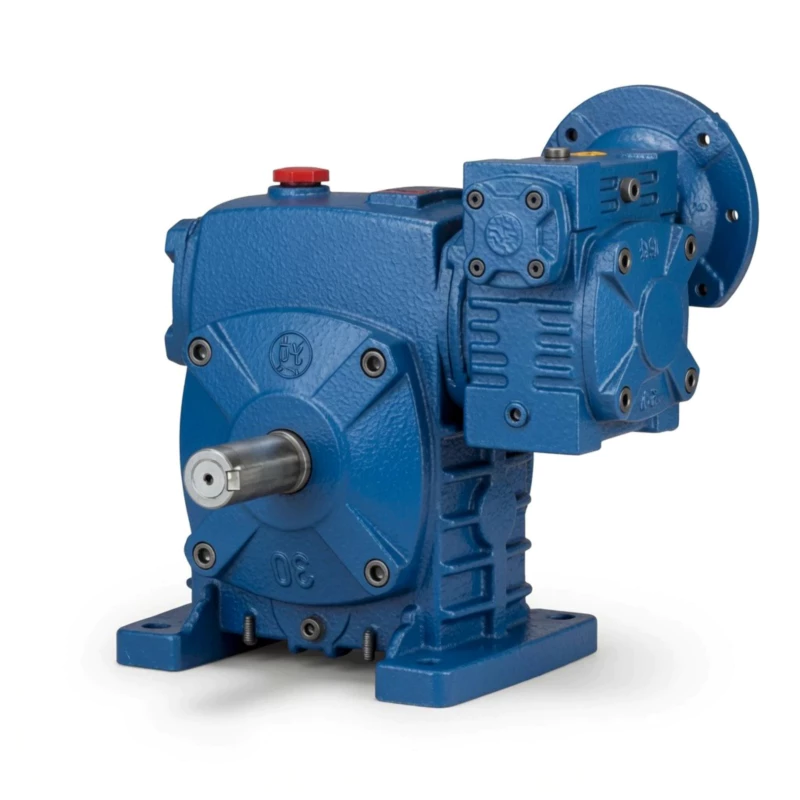
Engineering Data and Model Selection
| Parâmetro | Especificação |
|---|---|
| Faixa de relação de transmissão | 40:1 – 100:1 |
| Faixa de torque de saída | 500 – 10,000 Nm |
| Diâmetro do eixo de entrada | Ø 19 mm – Ø 50 mm (motor or hydraulic input) |
| Diâmetro do eixo de saída | Pitch Bearing Interface (custom flanged) |
| Material de construção | Die-Cast Aluminium or Stainless Steel, IP66 |
| Opções de montagem | Hub-Mounted Flange / Custom Bracket |
Wind turbine pitch drives face severe environmental and mechanical demands. Apply a minimum Fator de Serviço (FS) of 2.5 for safety-critical pitch mechanisms. The gearbox must maintain self-locking reliability across the full temperature range (-30°C to +60°C) and under vibration from rotor imbalance. Specify IEC 61400 compliance for wind turbine component design. Lubricant selection is critical — fully synthetic grease rated for extreme temperature variation and long re-lubrication intervals (5,000+ hours) is mandatory given the difficult access to tower-top nacelle equipment.
Compliance, Certifications and Protection Ratings
| Standard / Certification | Details |
|---|---|
| ISO 9001:2015 | Certified quality management system for design, manufacturing, and delivery |
| Certificação CE | Compliant with EU Machinery Directive 2006/42/EC |
| IEC 60072 | Motor interface dimensions per IEC standard for universal motor compatibility |
| Face C NEMA | NEMA standard motor mount options available on request |
| IP65 / IP66 | Full dust protection and water jet resistance for outdoor and harsh environments |
Proven Performance: Application Case Studies
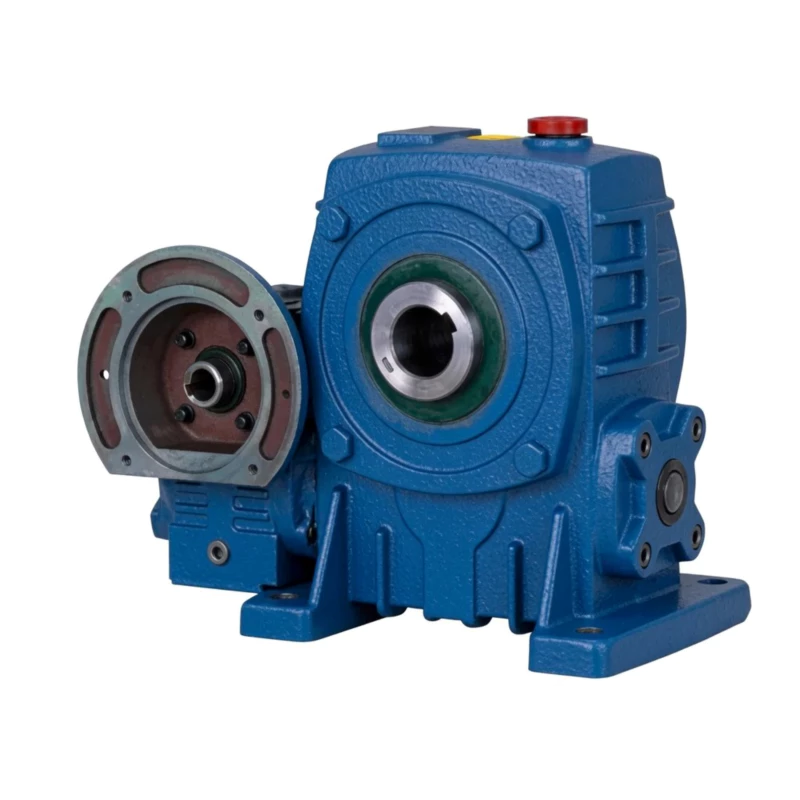
Our Competitive Advantages as Your Worm Reducer Supplier
Experiência no setor
Mais de 20 anos de experiência na fabricação de caixas de engrenagens helicoidais, atendendo ao setor de energias renováveis e a dezenas de outros setores industriais em todo o mundo.
Suporte técnico remoto
Equipe de engenharia dedicada disponível para resolução remota de problemas, fornecimento de modelos CAD e consultoria de aplicativos via videochamada, e-mail ou telefone em todos os fusos horários australianos.
Design personalizado OEM/ODM
Capacidade total de projeto não padronizado, incluindo configurações de eixo personalizadas, suportes de montagem especiais, relações de engrenagem modificadas e materiais de carcaça sob medida para atender aos requisitos exatos da aplicação.
Excelente custo-benefício
Preços direto da fábrica, sem margens de lucro de intermediários. Flexibilidade competitiva em relação à quantidade mínima de pedido e programas de desconto por volume para compras baseadas em projetos.
Logística Global
Rotas de transporte marítimo estabelecidas para todos os principais portos australianos, com opções de armazém alfandegado em Sydney e Melbourne para despacho doméstico rápido.
Common Questions About Worm Gearboxes for This Application
Q: Why are worm gears used in wind turbine pitch systems?
A: The self-locking capability provides a passive safety mechanism that holds blade position during primary drive failure, preventing dangerous overspeed conditions. The compact right-angle design fits within the confined space of the rotor hub.
Q: What temperature range must pitch drive worm gearboxes tolerate?
A: Typical design range is -30°C to +60°C to cover cold winter nights and hot nacelle interior temperatures during summer peak generation. Arctic-rated variants extend to -40°C for extreme cold regions.
Q: How reliable are worm gear pitch drives compared to hydraulic systems?
A: Worm gear drives have fewer failure modes than hydraulic pitch systems — no seals to leak, no fluid to degrade, no pressure accumulators to maintain. Reliability data from operating wind farms shows significantly higher availability.
Q: What international standards apply to wind turbine worm gearboxes?
UM: IEC 61400 series covers wind turbine component design requirements. ISO 9001 quality management, CE marking, and type certification by bodies such as DNV GL or TUV are standard requirements for wind turbine drivetrain components.
Q: Can worm gear pitch drives be retrofitted to existing turbines?
A: Yes, many wind farm operators retrofit worm gear auxiliary pitch drives as part of life-extension programs. The compact design typically fits within existing hub geometry with minor bracket modifications.
Request Your Custom Worm Reducer Quote Today
Every wind turbine pitch control systems installation has unique requirements. Send us your specifications and our application engineers will recommend the best worm gear solution, complete with technical drawings and competitive pricing.
Navegue pelos nossos gama completa de produtos ou saiba mais Sobre nossa empresa.