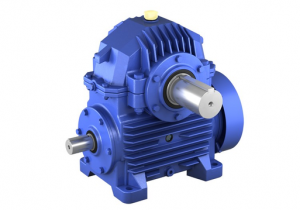
Safety-Critical Worm Gear Reducers for Industrial Elevator and Hoist Systems
Industrial elevators and hoisting equipment form the vertical transport backbone of warehouses, manufacturing plants, and distribution centres across Australia. Whether lifting palletised goods between mezzanine levels or transporting personnel in construction hoists, these systems carry a non-negotiable safety requirement: the load must never fall if the motor stops. The worm gear reducer’s inherent self-locking mechanism fulfils this fundamental safety function, making it the preferred — and in many jurisdictions mandated — drive technology for lifting applications. Explore the full range of worm gear products for vertical transport.
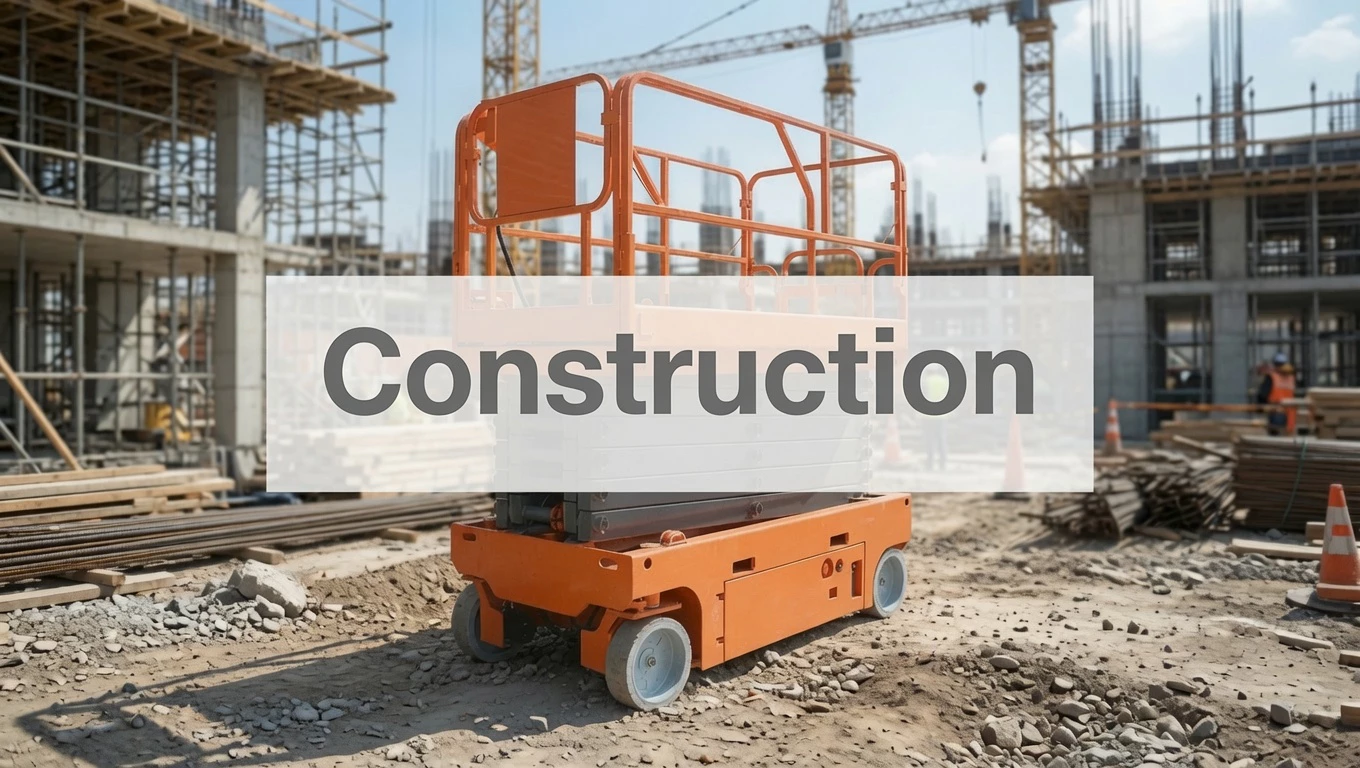
Vertical Lifting Drive Systems: Worm Gear Safety and Performance
Industrial elevators and hoists use electric motors driving through a speed reducer to raise and lower platforms, cages, or hooks via wire rope, chain, or rack-and-pinion mechanisms. The drive system must provide smooth, controlled acceleration and deceleration to protect both the load and the structure, while incorporating at least one independent mechanical means of holding the load in any position should power be lost.
The worm gearbox serves as both the speed reduction mechanism and the primary load-holding safety device. Its self-locking property — where the low helix angle of the worm prevents the output shaft from driving the input under gravitational load — means that the hoist will stop and hold in position the instant the motor de-energises. This is not a friction-dependent brake; it is a geometric property of the gear mesh that cannot wear out or slip.
Worm shafts are carburized and quenched alloy steel providing the surface hardness and core toughness demanded by lifting duty. Worm wheels are cast tin bronze, valued for its self-lubricating properties and long service life under reversing loads. Housings are cast iron or cast aluminium with IP54 protection suitable for both indoor warehouse and outdoor construction site environments.
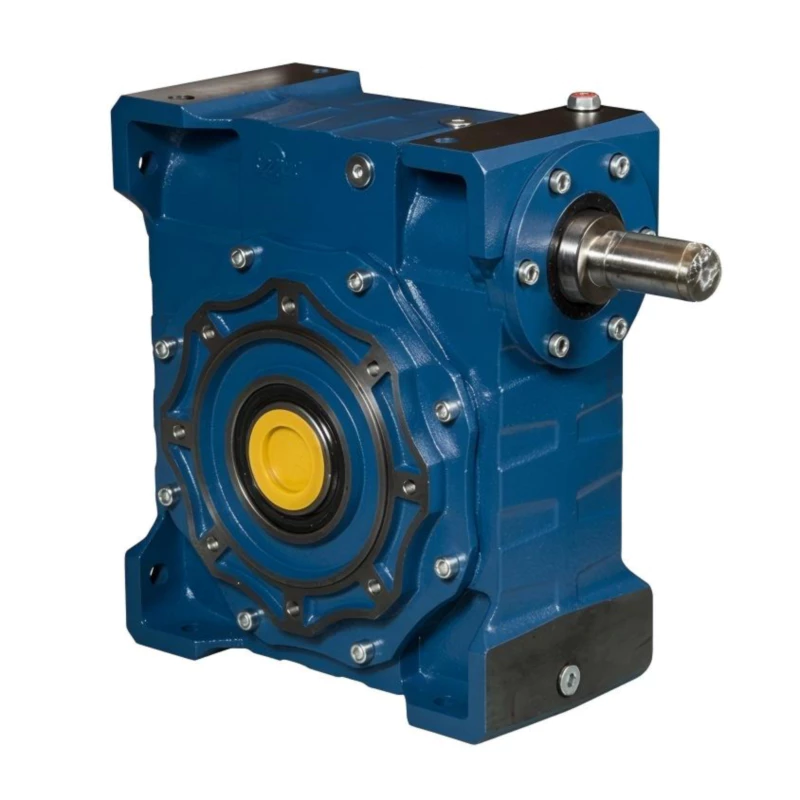
Technical Specifications and Selection Guide
| Paramètre | Spécification |
|---|---|
| Plage de rapports de transmission | 20:1 – 60:1 |
| Plage de couple de sortie | 200 – 6,000 Nm |
| Diamètre de l'arbre d'entrée | Ø 19 mm – Ø 55 mm |
| Diamètre de l'arbre de sortie | Ø 30 mm – Ø 100 mm |
| Matériau du boîtier | Cast Iron or Cast Aluminium, IP54 |
| Options de montage | Foot Mount / Flange Mount / Hoist Frame Integration |
Lifting applications require careful safety analysis. Apply a minimum Facteur de service (SF) of 2.0 for goods hoists and 2.5 for personnel hoists. The self-locking ratio must provide an adequate safety margin under the maximum rated load plus any dynamic overload factor. Compliance with IEC 60204-1 for electrical equipment of machines and AS 1418 for cranes and hoists is required. NEMA MG-1 motor standards may apply for imported drive motors. For outdoor construction hoist applications, IP54 minimum housing protection is mandatory, with IP55 recommended for extended outdoor exposure.
Conformité, certifications et indices de protection
ISO 9001:2015 — Quality management system certified across all manufacturing and assembly processes.
Certification CE — Full compliance with European Machinery Directive 2006/42/EC for global market access.
IEC Standard Interfaces — Motor input flanges and shaft dimensions conform to CEI 60072 for universal motor compatibility.
NEMA Standard Options — Face NEMA C and foot-mount configurations available for North American motor integration.
IP65 / IP66 Protection — Ingress protection rated for complete dust exclusion and resistance to powerful water jets, ensuring reliable operation in harsh outdoor and industrial environments.
Performances éprouvées : études de cas d’application
🏗 Warehouse Logistics – Melbourne
Equipment: Goods Hoist (2-tonne capacity, 3 levels)
Défi: Electromechanical disc brake wore unevenly, causing load drift of 15 mm per stop. Annual brake replacement cost AUD 4,500.
Solution: Worm gear self-locking provides geometric load holding independent of brake condition. Brake retained as secondary safety only.
Résultat: Load drift eliminated; brake replacement interval extended from 6 months to 3 years.
🛠 Automotive Manufacturing – Adelaide
Equipment: Assembly Line Platform Hoist
Défi: Helical gearbox drive required 3 separate braking systems for SIL 2 safety compliance, adding AUD 12,000 to each hoist unit.
Solution: Self-locking worm gear counted as primary holding device, reducing additional braking to a single secondary brake for SIL 2 compliance.
Résultat: Per-unit braking system cost reduced from AUD 12,000 to AUD 3,500; total project saving across 20 hoists: AUD 170,000.
📈 High-Rise Construction – Sydney
Equipment: Personnel/Material Construction Hoist (32 storeys)
Défi: Previous hoist drive generated excessive noise at upper floors, disturbing occupied floors below the construction zone.
Solution: Worm gear reducer noise output at 60 dB(A) is 15 dB quieter than previous spur gear drive. Noise attenuation through building structure further reduces audible impact.
Résultat: Noise complaints from lower-floor tenants eliminated; construction hours extended by 2 hours per day with council approval.
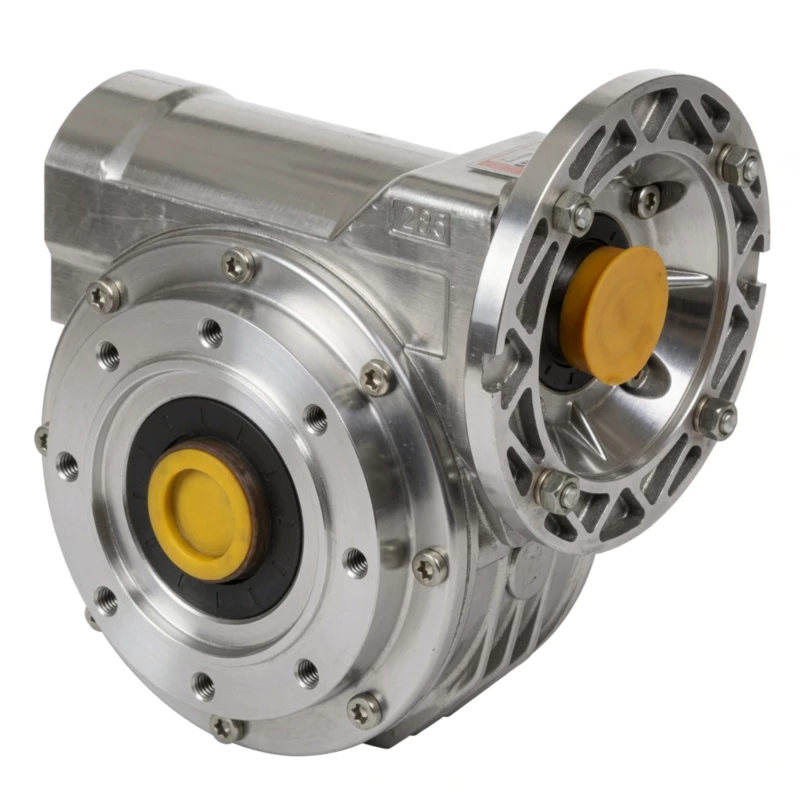
Nos avantages concurrentiels en tant que fournisseur de réducteurs de vers
Expérience dans l'industrie
Over 20 years of worm gearbox manufacturing expertise serving the construction & infrastructure sector and dozens of other industries worldwide.
Assistance technique à distance
Une équipe d'ingénieurs dédiée est disponible pour le dépannage à distance, la fourniture de modèles CAO et la consultation d'applications par appel vidéo, courriel ou téléphone, dans tous les fuseaux horaires australiens.
Conception personnalisée OEM/ODM
Capacité de conception non standard complète, y compris des configurations d'arbres personnalisées, des supports de montage spéciaux, des rapports d'engrenage modifiés et des matériaux de boîtier sur mesure pour répondre aux exigences exactes de l'application.
Valeur exceptionnelle
Prix direct usine, sans intermédiaires. Quantité minimale de commande flexible et programmes de remises sur volume pour les achats liés à des projets.
Logistique mondiale
Des lignes maritimes établies desservent tous les principaux ports australiens, avec des entrepôts sous douane à Sydney et Melbourne pour une expédition nationale rapide.
Questions fréquentes concernant les réducteurs à vis sans fin pour cette application
Why are worm gear drives considered essential for hoist safety?
The self-locking mechanism physically prevents the output shaft from rotating under gravitational load when the motor is stopped. Unlike friction brakes which can wear, overheat, or fail, the worm gear holding function is inherent to its geometry and cannot degrade over time.
What safety standards apply to worm gearboxes used in hoisting equipment?
In Australia, AS 1418 covers cranes and hoists. Electrical equipment must comply with IEC 60204-1. For personnel hoists, AS 2550 provides additional requirements. The gearbox self-locking function is typically recognised as a primary holding device within these standards.
How do worm reducers handle the reversing loads of hoist up/down cycles?
Tin bronze worm wheels are specifically selected for reversing-load applications. The material maintains stable friction and wear characteristics whether the output shaft is being driven up (motor driving) or held stationary (self-locking under load).
What is the noise level of worm gear hoist drives?
Worm gear drives typically produce 55–65 dB(A) at 1 metre, significantly quieter than spur or helical gear alternatives. This makes them preferred for hoists operating in noise-sensitive environments such as hospitals, offices, and residential buildings.
Can a single worm reducer serve as both speed reduction and load holding?
Yes, and this dual function is the primary advantage of worm gears in lifting applications. The same unit that reduces motor speed to hoist speed also provides inherent load holding, eliminating the need for a separate backstop or primary holding brake.
How is the self-locking ratio verified for a specific hoist load?
The self-locking condition is verified by calculating the worm lead angle against the static friction coefficient of the worm-wheel material pair. Standard bronze-on-steel combinations are reliably self-locking at ratios above approximately 30:1. The manufacturer provides verified self-locking data for each model.
Demandez dès aujourd'hui votre devis personnalisé pour réducteur de vers.
Every industrial elevators & hoists installation has unique requirements. Send us your specifications and our application engineers will recommend the best worm gear solution, complete with technical drawings and competitive pricing.
Parcourez notre gamme de produits complète ou en savoir plus à propos de notre entreprise.